
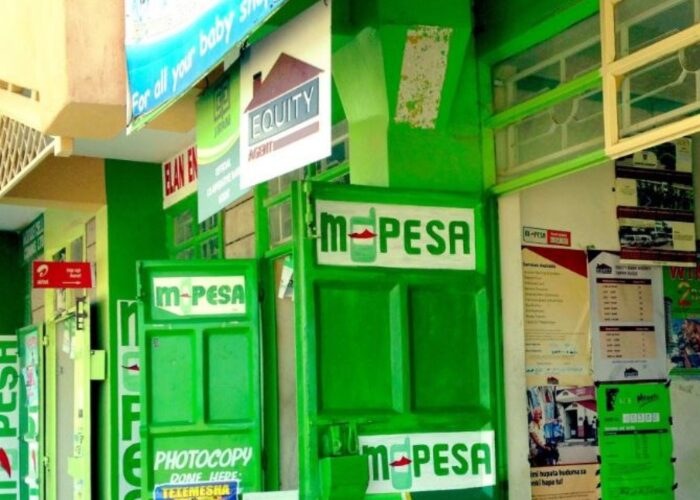
Mobile money services have emerged as a transformative financial innovation in Kenya. The have advanced financial inclusion by allowing individuals to sent, receive or save money without the need for a traditional bank account. However, despite the advantages, the cost associated with these services remains a critical concern, especially for low-income Kenyans who relies heavily of these platforms for daily transactions.
Most mobile money providers charge users for sending money, withdrawing cash, paying bills and even checking account balances. For instance, according to the Central Bank of Kenya, the average fees for person-to-person transfers currently stands at approximately Ksh 23 per transaction across various transaction sizes and providers.Off-network transfers are often more expensive due to limited interoperability.
Additionally, transaction fees are based on a regressive manner (tiered pricing models). This means that the charged fees represent a much higher percent of the value of small transactions. For instance, withdrawing Ksh 200 from an agent costs about Ksh 29, which repreresents approximately 14.5% of the withdrawn amount. In contrast, withdrawing KSh 50,001-250,000 attract a fee of KSh 309, which isjust 0.62%
For low-income user who typically make smaller, more frequent transfers and withdrawals, the high transaction fees can consume a significant percentage of their monthly income. For instance, a person making withdrawals of Ksh 200 ten times each month incurs charges amounting to Ksh 300. This is not the case for high-income individuals who often make larger, less frequent transactions.
High transaction fees can deter low-income individuals from using the services for small-value transactions, or as saving tool. Evidence has show that fees hikes can lead to a significant reduction in transaction volume among low-income households.
CBK, in its latest policy initiative Kenya National Financial Inclusion Strategy 2025-2023, the high person-to-person transfers can hinder the adoption of services like savings, insurance, digital credit or investments. This causes millions of low-income households to remain excluded from broader financial services.
Mpesa vs Alipay
To understand the true cost of mobile money services in Kenya, let’s compare M-Pesa with China’s largest mobile money platform, Alipay.
For M-pesa, fees are charged for sending money and cash withdrawals, with charges based on transaction value.
Alipay’s fees structure, on the other hand, is primarily designed to encourage users to keep their funds in the wallet and use it for payments. Payments within China are largely free for the consumer; fees are more common for large withdrawals/transfers out of the app, or for foreign users making large transactions with international cards. Consumers pay nothing for local transactions or for using their Alipay balance,
The following table outlines the differences between the two systems.
| Feature | M-Pesa | Alipay |
| Sending Money (P2P) | Charged (tiered based on amount). | Usually Free (between Alipay users). |
| Withdrawing Cash | Charged (tiered based on amount). | Can be Charged (a small fee on amounts exceeding a lifetime free limit). |
| Paying Merchants | Often Free for the customer. | Usually Free for the consumer. |
| Focus of Fees | Sending money and cash withdrawals. | Transfers out of the ecosystem (bank) and, for foreigners, using linked international cards. |
| Fee Structure | Tiered/stepped based on transaction amount. | Often a percentage or a flat fee after a free limit is reached. |
CBK’s Proposal to Cut Transaction Fees
The Central Bank of Kenya (CBK) has announced plans to cap P2P transfer charges, National Financial Inclusion Strategy 2025-2028, which aims to cut the average transaction cost from Ksh 23 to Ksh 10 by 2028. The proposed fee reduction is mainly in response to the plateauing growth in mobile money access and usage, with most users relying primarily on person-to-person transfers rather than advanced offerings such as insurance, savings or digital credit. The central bank also aims to improve interoperability by developing a fast payment system that enable instant and seamless transfers across different financial institutions.
Ultimately, the reduction of transaction fees could benefit many Kenyans, especially those in lower-income segments. The policy initiative could significant enhance financial inclusion for youth, women, and rural populations. However, more is need to address the issue of high transaction fees and to protect low-income users.
What’s Way Foward
- Introduce near-zero fees for P2P transfers, particularly for small to medium amounts. Low P2P fees enhances digital circulation of money. Also, the government should implement policies that mandate lower fees for low-value withdrawals.
- Regulate Mobile Network Operators (MNOs) to shift away from regressive pricing models for all transactions, which disproportionately burden low-income users toward to a percentage pricing model, which is fairer across all transaction sizes.
- Remove taxes on fees for person-to-person transfers. These taxes places a significant burden on the already constrained budget for low-income individuals.
- Enhance interoperability and competition. The government should mandate or incentivize providers to reduce or eliminate fees for cross-network network.
- Ensure that the cost of USSD access for competitors is fair, non-discriminatory, and transparent. Fair pricing is critical for competitors to effectively reach the mass market and promote a competitive ecosystem.
- Support innovation by maintaining a regulatory environment that encourages new financial products, especially those targeting vulnerable populations, small farmers and micro-enterprises.
- Mandate all businesses to accept cash for business transactions. This would preserve financial inclusion, and maintain consumer choice.
Conclusion
Mobile money transactions are significantly expensive, especially for small transactions. Therefore, transaction fees can disproportionately affect low-income individuals. The government must move to make transactions cheaper or free. However, mobile money platforms must make profits to exist. The success of these changes hinges on the intensive participation of mobile money providers, who need to protect their bottom line.
Read more: Monetary and Fiscal Policies aren’t enough to fix Kenya’s Economy