
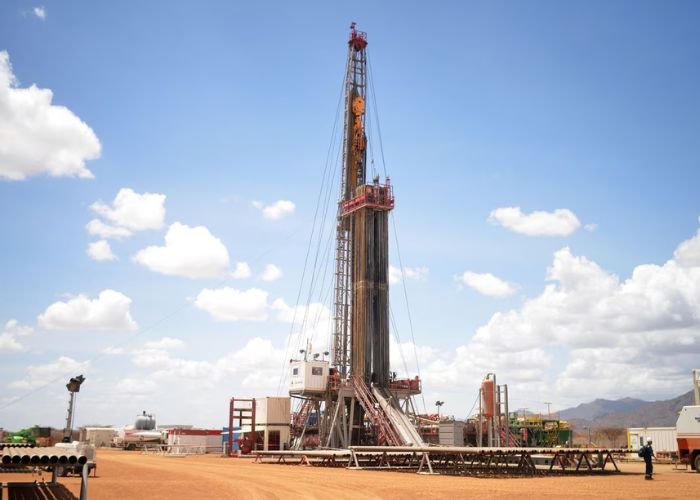
Kenya has significant mineral wealth, and much of it remains unexplored and underexploited. A nationwide geophysical survey in 2022 revealed 970 mineral occurrences, including coltan, gold, titanium, gemstones, and rare earth elements. In addition, the country’s petroleum potential is enormous, with significant oil and gas discoveries imminent. In the near future, Kenya will be a major oil-producing nation – a development that will surprise many and reshape the country’s economic landscape.
However, the benefits of these resources to Kenya and its economy depend on how effectively they are harnessed and managed. Nationalization, if well-designed and transparently managed, could be a key pillar of Kenya’s industrialization and fiscal stability.
Why nationalize
Wealth retention
Among the key benefits of nationalization is the retention of national wealth. Currently, Kenya heavily relies on foreign companies to mine key minerals. While foreign investment brings capital and capital expertise, a significant share of profits is repatriated abroad. The government and the citizens only retain a small amount of the profits, often in forms of taxes and royalties. A good example is the titanium mining in Kwale, which generated $286 million in exports in 2022. Yet, the government received 16% of this value in royalties and taxes. For the ten years of Base Titanium’s operation in Kwale, the government only received Sh 36 billion while the parent company received hundreds of billions of shillings.
Increased government revenue
Nationalization of petroleum resources and critical minerals would allow Kenya to retain a greater proportion of mining revenues. Countries such as Saudi Arabia, Norway, and Botswana have demonstrated how strategic state participation in mineral extraction—particularly diamonds—can dramatically improve public revenue, fund infrastructure, and reduce poverty. Kenya could adopt a similar hybrid model where the state holds a controlling stake while relying on private investors for technical expertise.
The policy would significantly expand non-tax revenue streams, reduce over-reliance on borrowing, and ease pressure on taxpayers. The revenue from dividends, royalties and export earnings would support large-scale public spending on education, healthcare, housing, and other social support program. Free primary and secondary education, and subsidized university education would turn into reality. The country can also create its sovereign wealth fund and fund mega-projects, including airports, and modern transport systems using earnings from critical minerals, oil and gas.
Secure domestic supply for emerging industries
Allowing foreign firms to dominate the extraction of critical minerals could weaken Kenya’s existing and emerging industries. Critical minerals are essential for advanced manufacturing, digital technologies, defense, and, more importantly, clean energy solutions, including electric vehicle batteries, solar panels, and wind turbines.
Strategic decisions on pricing, processing, and supply allocation could be influenced more by foreign corporate interests than by national development priorities. For instance, multinational corporations pursue high profit and prioritize raw material exports over domestic processing. This “export-oriented” strategy can deprive local industries of raw materials, thereby hindering industrialization. By nationalizing or gaining majority control, Kenya can negotiate favorable trade terms and secure supplies for local industries. The country could offer minerals to local companies at a lower or discounted price. This will position the country as a key player in Africa’s energy transition while securing strategic minerals for the future.
Curbing over-exploitation and improving regulation
Mining often comes with concerns such as overexploitation, opaque licensing, underreporting of exported minerals, limited community benefits, and environmental degradation. Nationalization or strategic public-private partnerships would provide the government with stronger oversight of extraction output, environmental compliance, tax compliance, and community development agreements. Moreover, when managed with transparency and strong institutions, state ownership can reduce illegal activities and ensure equitable distribution of resource wealth.
Strong benefits to local communities
Mining regions often experience health risks, environmental degradation, and social disruption with fair economic benefits. Recently, Turkana residents complained of economic injustice because they did not benefit from the oil sales, despite housing the resources. A nationalized oil industry could help prevent “resource curse” by mandating stronger revenue sharing, local employment quotas, and increased infrastructure investments in affected regions. Using oil or mineral wealth to fund local development would promote social stability. This would prevent conflicts over access to or control of these resources.
Recommendations
Nationalization requires effective strategic planning to navigate economic, political, and social complexities. Here are recommendations on how Kenya should navigate this process. To be clear, I don’t mean we should nationalize all minerals, but only critical high-value minerals and petroleum resources.
Oil and gas
- Expand the National Oil Corporation of Kenya (NOCK) operations to upstream operations. Currently, NOCK is primarily active in downstream petroleum marketing and limited exploration activities. To undertake national oil operations:
- Amend legislation to grant NOCK an automatic carried interest in all new oil blocks.
- The state fully controls the exploration, production, refining, and export through NOCK.
- Renegotiate existing contract (Turkana Oil Blocks) to ensure that NOCK holds a minimum 51% stake in existing strategic oil fields till expiry.
- Partner with international firms under service contracts instead of concession models.
- Recruit global technical expertise, including geologists and petroleum engineers. Partner with global technical firms for knowledge transfer.
- Strengthen governance and transparency through independent board appointments, external audits, and public disclosure of contracts and production volumes.
Mining
- Fully nationalize rate earth elements, titanium, coltan, niobium, battery minerals (lithium, cobalt, manganese, etc), and large-scale precious metals such as gold and silver.
- Capitalize the National Mining Corporation of Kenya (NAMICO) to independently explore and mine all strategic minerals.
- Leave small-scale and low-value mining private.
- Recruit global technical expertise, including geologists and petroleum engineers. Partner with global technical firms for knowledge transfer.
- List NAMICO’s minority shares on NSE for transparency and to allow Kenyans to invest and earn dividends.
- Mandate domestic value addition – require local refining and processing, offer tax incentives for smelting and beneficiation plants, develop mineral industrial parks, and impose export restrictions on raw critical minerals where appropriate.
Other recommendations
- Prevent political interference of NOCK and NAMINO by implementing safeguards such as independent board appointments, auditor-general oversight, and competitive procurement rules.
- Use oil, gas, and mineral revenue to build the sovereign wealth fund, which should finance education, healthcare, infrastructure development, and industrialization.
Of course, developing the mining sector requires substantial capital investment in exploration, infrastructure, technology, and skilled labor. To avoid overburdening taxpayers or straining public finances, National Mining Corporation (NAMICO) should adopt a phased and strategic approach.
Rather than attempting to develop all mineral resources simultaneously, NAMICO could prioritize a select number of high-value, strategic minerals. For example, beginning with minerals such as coltan (a key source of tantalum used in electronics) and niobium (critical for high-strength steel alloys and emerging technologies) would allow the corporation to focus resources where global demand and value addition potential are strongest.
By concentrating on a few commercially viable minerals in the initial phase, NAMICO can reduce upfront financial exposure, build technical expertise and institutional capacity, establish efficient operational systems, and generate early revenue streams.
The revenues generated from these priority minerals could then be reinvested to finance the exploration and development of other mineral resources over time. This self-financing model would promote sustainability, reduce dependence on external borrowing, and strengthen Kenya’s long-term strategic control over its mineral wealth.
Final thoughts
Nationalizing oil, gas, and strategic minerals presents an opportunity to transform our economy and change the lives of all citizens. Continued reliance on foreign-dominated and export-led extraction risks locking us in a pattern where raw materials leave the country but the profits are realized abroad. With transparency, efficiency, and strong governance, nationalization could turn mining into a major driver of economic growth, fiscal strength, and inclusive development. The country could clear its current debt if resource nationalization were done.
Article originally published in September 2025, authored by David Wachira.
Read more: Transparency: The Key to Transforming Kenya’s Mining Sector