
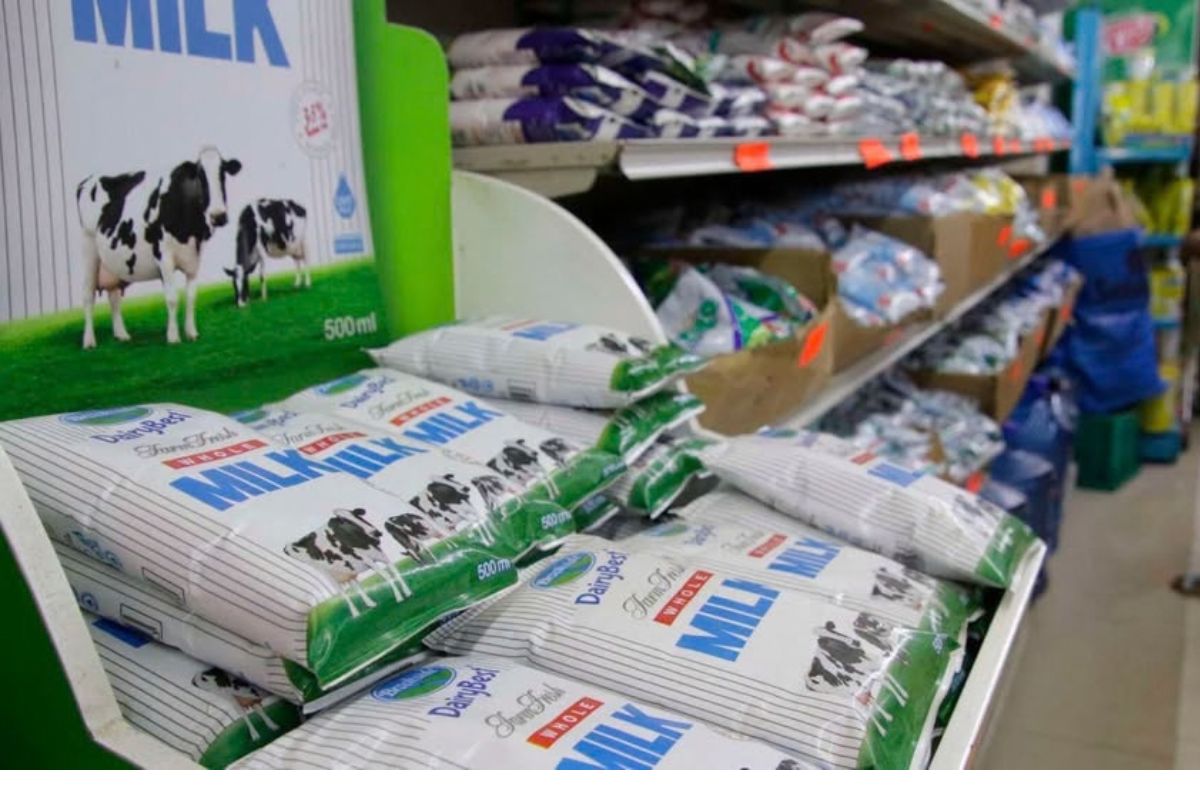
Kenya’s milk shortage is continuing to put pressure on consumers, dairy farmers, traders and processors, with prices rising in several parts of the country.
The latest situation is particularly evident in Nyeri, where supermarkets have increased prices for several milk brands and introduced limits on the number of packets customers can purchase. Some outlets have reported increases of about Sh5–Sh10 per packet.
The shortage is being driven largely by prolonged dry and cold weather, which has reduced pasture and increased farmers’ dependence on expensive commercial feeds. Formal milk deliveries to processors fell from 84.4 million litres in June to 81.3 million litres in July, a 3.7% decline.
The pressure is particularly serious for small-scale dairy farmers in rural Kenya. In Nyeri, one farmer reported that his daily production had fallen from about 30 litres to just 10 litres, largely because of the rising cost of animal feed.
The shortage is also changing how farmers sell their milk. Some are choosing direct retail markets because they can receive around KSh70 per litre, compared with roughly KSh50 per litre from some dairy processors. Other processors are increasing farm-gate prices to retain suppliers.
Agriculture Cabinet Secretary Mutahi Kagwe has said the shortage is mainly linked to drought and reduced feed availability, while also pointing to consumer panic buying. He has ruled out foot-and-mouth disease as the primary cause and expects supply to improve as rains restore pasture.
The problem goes beyond milk prices. Lower production is affecting rural incomes, dairy cooperatives, milk-processing businesses, cafés and household food budgets. One Nyeri dairy reported that daily collections had fallen from about 10,000 litres earlier in the year to 6,000 litres.
What happens next?
The immediate hope is that the ongoing rains will improve pasture and reduce farmers’ dependence on expensive commercial feeds. However, the experience highlights a deeper vulnerability in Kenya’s dairy sector: heavy dependence on weather conditions and high feed costs.
For consumers, milk prices may remain elevated until farm production and deliveries to processors recover.